

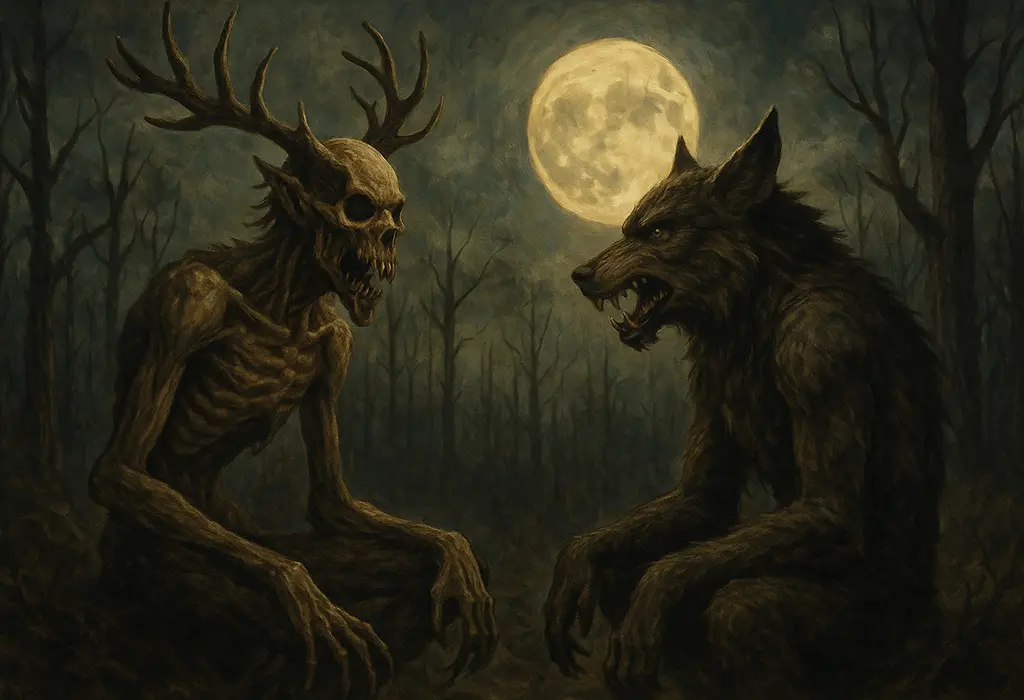
Wendigo vs. Skinwalker: What’s the Difference Between These Two Terrors?
From frozen forests to desert mesas, Indigenous folklore warns of beings that blur the line between humanity and horror. Two of the most chilling figures are the Wendigo and the Skinwalker. Though they come from different traditions, both embody fears that remain powerful today—greed, betrayal, and the unknown.
Origins in Folklore
Wendigos and Skinwalkers come from very different cultural roots, but both serve as warnings within their traditions. These stories were never meant to be simple scares—they were teaching tools tied to survival, morality, and community values.
Wendigo in Algonquian Legends
The Wendigo comes from Algonquian-speaking tribes of the northern forests, especially in regions of Canada and the Great Lakes. Often described as a spirit of winter and famine, the Wendigo is born from cannibalism during desperate times.
To the Algonquian people, the Wendigo embodied the dangers of greed, hunger, and losing one’s humanity.
Skinwalker in Navajo Beliefs
The Skinwalker, or yee naaldlooshii, comes from Navajo traditions in the American Southwest. Unlike the Wendigo, which is tied to hunger and survival, the Skinwalker is a witch who chooses to embrace dark magic.
These beings are feared for their ability to transform into animals, steal identities, and spread fear within communities.
Cultural Context and Regional Spread
While the Wendigo is associated with northern, cold landscapes where starvation was a real threat, Skinwalker legends are rooted in the desert and canyonlands of the Southwest. Both legends spread beyond their cultural origins over time, appearing in books, movies, and urban legends.
They have become part of modern paranormal lore, drawing attention from horror writers, cryptid enthusiasts, and even television shows that explore their stories. In many ways, these myths now function on two levels: as cultural teachings within Indigenous communities and as broader horror symbols for global audiences.
Yet within their respective communities, these figures remain sacred warnings rather than just scary stories, respected as part of living traditions rather than fictional monsters.
Physical Appearance and Traits
Both beings are defined by terrifying physical qualities. The Wendigo represents a twisted, skeletal monster born of hunger, while the Skinwalker’s terror comes from its ability to shift and deceive. Their appearances reflect their symbolic roles—one monstrous, the other deceptive.
Wendigo’s Cannibalistic Features
The Wendigo is usually described as emaciated, towering, and gaunt, with skin stretched tight over its bones. Its eyes glow with hunger, and in some versions, it has antlers or decaying features that reflect its unnatural state. Its skeletal frame and monstrous visage serve as physical reminders of its cannibalistic origin—humanity twisted into something inhuman.
In other accounts, the creature’s breath is said to freeze the air, its voice carries an eerie echo through the trees, and its body gives off a foul odor of decay. Some traditions even describe it as growing larger with each meal, its frame stretching impossibly tall, so that its size mirrors the bottomless hunger consuming it.
Skinwalker’s Shape-Shifting Abilities
Skinwalkers differ drastically in appearance. They are said to take on the form of animals—often wolves, coyotes, owls, or even bears. Some stories describe them as half-human, half-animal hybrids with glowing eyes and distorted bodies. Their ability to disguise themselves makes them terrifying, since they could be a neighbor by day and a predator by night.
How Each Is Described in Modern Media
Modern depictions often exaggerate these traits. Wendigos are shown in films and games as skeletal giants with antlers and horrific jaws, emphasizing the theme of starvation and consumption.
Skinwalkers, on the other hand, are portrayed in horror stories and paranormal accounts as shadowy figures that stalk and imitate, drawing on the fear of betrayal and deception. These media portrayals keep the myths alive, though they sometimes blur cultural authenticity.
Behavior and Powers
Where the Wendigo’s terror comes from an unstoppable craving, the Skinwalker’s threat lies in deliberate dark magic. Each acts as a predator in its own way—one driven by need, the other by choice.
Insatiable Hunger of the Wendigo
The Wendigo is driven by an endless craving for human flesh. No matter how much it consumes, it can never be satisfied. This hunger symbolizes both famine in harsh winters and the destructive force of greed. Stories describe Wendigos as hunting relentlessly, sometimes even mimicking voices to lure victims into the woods.
Dark Magic Behind the Skinwalker
Unlike the Wendigo’s cursed hunger, the Skinwalker’s powers come from deliberate choices. According to Navajo belief, a person becomes a Skinwalker by committing terrible acts, such as harming a loved one, to gain power.
Once initiated, they wield dark witchcraft, shape-shifting into animals, moving with unnatural speed, and instilling fear through curses or possession.
Similarities and Key Differences
Both creatures inspire fear but for different reasons. The Wendigo represents an unstoppable hunger and the loss of humanity, while the Skinwalker embodies betrayal and corruption from within the community. Where the Wendigo stalks from the wilderness, the Skinwalker hides in plain sight. Together, they reflect the dangers of external forces and internal treachery.
Symbolism and Fear
These myths endure because they speak to human anxieties—whether about greed, betrayal, or survival. The Wendigo warns against selfishness, while the Skinwalker reveals the horror of trust broken from within.
Wendigo as a Warning Against Greed
The Wendigo is often seen as a cultural warning about unchecked greed, selfishness, and excess. In stories, its endless hunger shows what happens when survival turns into obsession and when humanity gives way to consumption at all costs. It reminds people of the dangers of losing compassion and balance during times of hardship.
In some interpretations, the Wendigo also represents a punishment for those who take more than their share, consuming resources without regard for others. By placing fear into the image of an unstoppable monster, these tales reinforced the values of restraint, sharing, and respect for the community, teaching that unchecked desire could destroy not just an individual but an entire society.
Skinwalker as a Symbol of Betrayal
The Skinwalker embodies betrayal within a community. Because these witches were once trusted members of society, their transformation into Skinwalkers represents a break of trust and loyalty.
Their ability to blend in as ordinary people emphasizes the fear that danger might come from those closest to you.
Why These Myths Still Terrify Today
These legends endure because they tap into primal fears: the loss of control, the corruption of trust, and the breakdown of community.
Modern audiences still find them chilling because they speak to universal anxieties—hunger that cannot be filled, neighbors who cannot be trusted, and the idea that evil may lurk behind familiar faces.
Final Thoughts
The Wendigo and the Skinwalker remain powerful symbols because they capture universal fears in unforgettable forms. One warns of hunger and greed, the other of betrayal and corruption. Though their origins are rooted in specific cultures, their lessons still resonate today—reminding us that the greatest horrors often reflect the darkest parts of ourselves.