
From Harvest to Halloween
They say the first apples to float in dark water weren’t meant for laughter. Long before party games and sticky fingers, apples drifted through candlelight at the end of harvest—tokens of plenty, luck, and the uneasy shift into winter’s shadow.
The Autumn Festivals of Old
At Samhain, when the year was dying and the veil between worlds thinned, people left apples for wandering souls. Their bright skins glimmered beside fires and feasts, offered to gods, ghosts, and the promise of another spring.
The air was sharp with smoke and cider. Families gathered near the fading fields, placing apples on stone walls or near doorways for the unseen to find. Each offering was a quiet pact with the turning year—life preserved through the cold, sweetness held against the dark that crept a little closer every night.
How Apples Became a Symbol of Luck and Love
In the folklore of the isles, apples whispered names. They were peeled and tossed, rolled and caught, each act a small wager on the heart. The apple’s pale skin curled like a ribbon of fate, and each twist carried a question of who might be waiting beyond the year’s turn.
If the peel fell whole, it meant good fortune would follow—perhaps a promise kept or a meeting fated by chance. If it broke, so might a dream, a sign that love would have to wait for another season.
Such games blurred prayer and play, hope and superstition, turning small acts into messages from something unseen. In every flick of the wrist and every fluttering peel, belief and wonder lingered just beyond the candle’s edge.
Early Harvest Games and Offerings
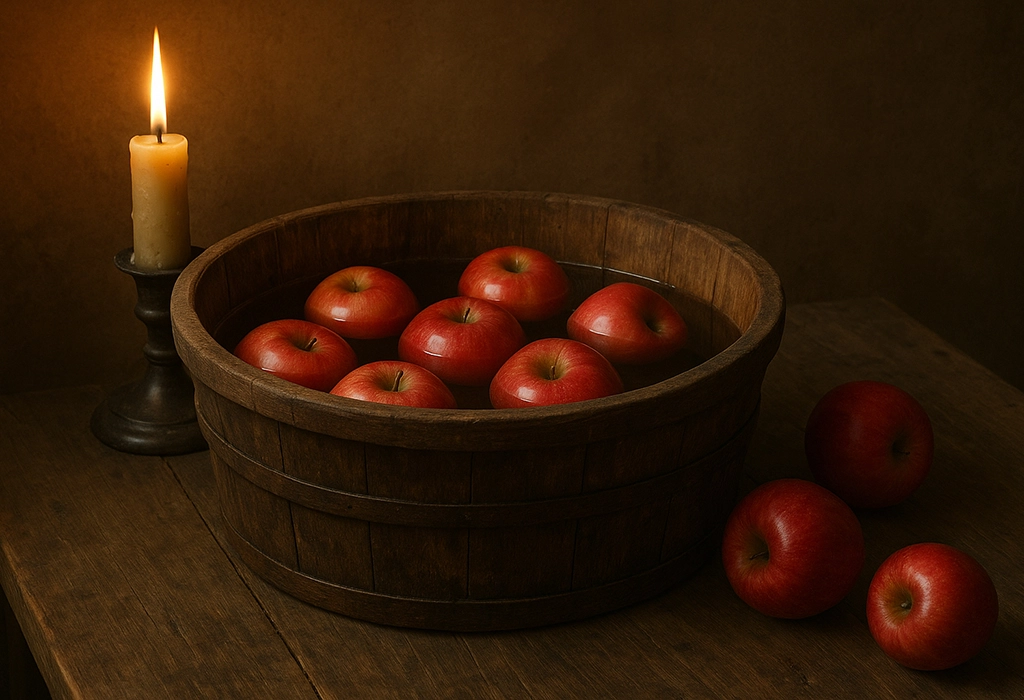
What began as ritual drifted toward recreation. Villagers gathered at dusk, lanterns flickering as they dipped for apples to see whose fate might surface first. The game carried both tension and laughter—a mix of reverence and release that made the night feel alive.
The splash of water was both test and blessing. Each ripple broke the moment open, reminding them that luck, like breath, came only to those bold enough to reach. And when a face rose, dripping and triumphant, it was as though the harvest itself had smiled back.
The Fortune-Telling Game
By the time it reached the parlor, the water was clearer, but the echo of magic lingered. Bobbing for apples became a dance of fortune and flirtation, its meaning softened but never fully lost.
Love and Marriage Rituals
In the countryside, they said whoever caught an apple would soon find love. Some marked the fruit with initials, waiting to see which one would float to the surface first. The air around the tubs was often filled with teasing and laughter—each apple carrying a small hope or dare.
The lucky bite could hint at a wedding, or maybe just a shared smile across the room. The game was simple but charged with meaning, where a quick catch could start a story that might linger long after the party ended.
The Transition from Divination to Party Game
When the Victorians borrowed the custom, they traded quiet superstition for lighthearted fun. The tub remained, the laughter grew louder, and the apple became part of a parlor game instead of a ritual.
The charm didn’t disappear, though. There was still a hint of something older in the way people played—an unspoken feeling that fate might still be floating somewhere in the water.
The Role of Apples in Courtship
Even without its omens, the game kept an air of chance. One bite could spark a laugh, a small rivalry, maybe even a rumor that carried through the evening.
The water rippled, faces hovered above it, and somewhere in that mix of fun and uncertainty was the same question people had asked for centuries—who would be chosen next?
Regional Variations and Local Superstitions
Scots hung apples on strings instead of letting them float, turning the challenge into something both clumsy and comical. The apples swung just out of reach, and the laughter that followed was part of the fun.
In Ireland, Samhain fires burned close to where the tubs stood, casting orange light over the players as they leaned in to catch their prize. The smell of smoke and wet apples filled the air, and someone always told an old story while waiting for their turn.
Somewhere in between, a child might still look toward the moon before biting—just to see if luck, or maybe love, was paying attention.
Crossing the Atlantic
When the old customs crossed the ocean, they found fertile ground. In America’s early settlements, apples grew in abundance, and so did their myths. The game was no longer divine—but it was familiar, a touch of home preserved in water.
How the Game Evolved in America
Colonial families played at harvest feasts, the apples shining like small suns. They no longer asked them questions—only tested who was quickest to catch. The game brought neighbors together, filling barns and fields with laughter after long days of work.
Yet even then, some said the first to bite would soon find affection waiting. It was half joke, half belief—a small echo of the old superstitions that had crossed the ocean with them, softened by time but never completely forgotten.
Bobbing for Apples in the Modern Era
By the turn of the 20th century, the game had settled into Halloween as naturally as pumpkins and paper lanterns. Schoolchildren bent over tubs at school parties and church halls, their laughter replacing the old chants that once carried over village fields.
Candy had taken the place of ritual, but something of the rhythm remained. Each splash and cheer still felt like an echo of harvest nights long gone, when apples meant more than sweetness and every bite carried a trace of old belief just beneath the surface.
Cultural Shifts Around Halloween Traditions
As the holiday grew brighter and busier, apple bobbing began to fade into the background, a quieter custom among louder celebrations. It showed up in old photographs and grainy home movies, a small moment between costume contests and candy bowls.
At fall fairs and school carnivals, the game kept its place mostly through nostalgia. Parents remembered playing it, children tried it once and laughed at how strange it felt. Still, it remained—a tradition simple enough to survive the changing times.
Maybe that’s why it lasted. It asked for nothing complicated, only a little courage, a bit of air, and the will to dive face-first into a piece of history that still floats, waiting to be found again.
The Rise of Party Games in the 20th Century
Even as plastic decorations and costume parades took over, the apple stayed. It lingered as a small reminder of older customs that didn’t need much to survive.
Its red skin caught the porch light, and for a moment it looked almost alive—a quiet echo from the harvest past, still finding its place among the newer lights of Halloween.
Symbolism and Seasonal Meaning
Still, the old meanings linger. Every autumn, when water ripples and fruit rolls beneath the surface, it’s hard not to feel something ancient watching.
Apples as a Bridge Between Life and Death
They once said apples could cross worlds. Buried in graves or placed on windowsills, they were small gifts meant to guide the departed home.
In some villages, families left them by candlelight, believing the fruit would help spirits find warmth on cold nights. Children were told that each apple’s glow marked the path between the living and the lost.
Their seeds, hidden and waiting, promised return—a quiet defiance against the dark, and a reminder that even in death, something new was always ready to grow.
The Cycle of Nature and Renewal
The game itself mirrors the season. Hands plunge, breath holds, and for a heartbeat everything goes still.
Then comes the splash—a small shock of sound and water as the apple breaks free. The player rises, grinning and dripping, caught between triumph and relief.
It’s a simple act that carries the rhythm of the season. Life, death, and renewal—all played out in a bucket of water and laughter.
Folkloric Beliefs About Apples and Spirits
In old tales, an apple left untouched was never wasted. It was meant for those who’d gone before.
Even now, some leave fruit outside on Halloween night, not for sweetness but for memory. A quiet offering on the porch, a small way to say they’re still remembered.
Why the Tradition Still Resonates Today
Bobbing for apples endures because it’s simple, almost sacred in its ordinariness. It connects harvest to hearth, the living to the lost.
There’s no score to keep, no real prize to win—just laughter, breath, and a quick rush of cold water. Maybe that’s why it’s lasted this long.
And when the candles flicker on a cold October night, the sound of water still seems to carry stories. The ripples move like voices by the fire, remembering the faces that once leaned close and dared the darkness to reach back.
Previous Post