

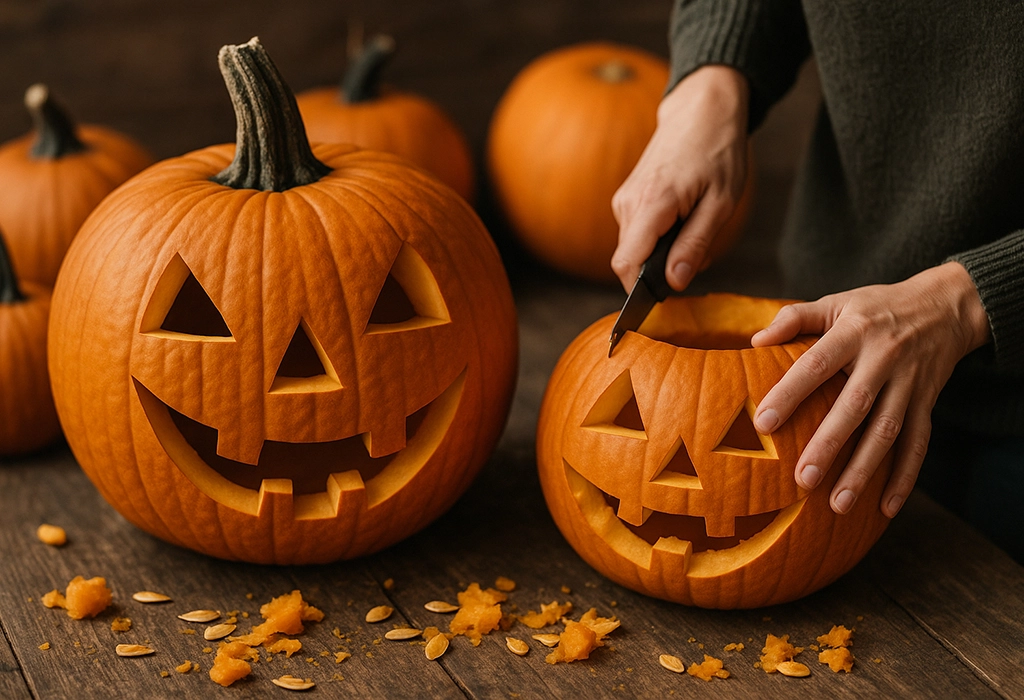
The Origins of Pumpkin Carving
Pumpkin carving dates back centuries to Ireland and Scotland, where people carved faces into turnips and potatoes during Samhain to scare away spirits. When Irish immigrants arrived in America, they found pumpkins easier to carve and brighter, turning the custom into the glowing tradition we know today.
From Turnips to Pumpkins: The Irish Roots
Before pumpkins, the Irish and Scottish carved turnips to create grotesque faces. These were placed in windows or near doors to ward off evil and light the way for spirits.
When settlers brought this custom to North America, they found the native pumpkin to be larger and softer — perfect for carving. Over time, the pumpkin became the centerpiece of the tradition.
The Legend of Stingy Jack
The tale of Stingy Jack tells of a man who tricked the devil multiple times but was denied entry to both heaven and hell upon his death. Condemned to wander the earth with only a glowing coal in a carved-out turnip, Jack became known as “Jack of the Lantern.”
This legend inspired people to carve lanterns to keep his restless spirit — and others like him — away.
How the Tradition Crossed to America
When Irish immigrants arrived in the 19th century, they brought the Jack-o’-lantern tradition with them, carrying memories of eerie turnip lanterns and tales of Stingy Jack.
The abundance of pumpkins in America not only made carving easier but gave the ritual a new, lively spirit.
What once served as a grim warning against evil transformed into a festive craft of warmth, creativity, and community pride, paving the way for the elaborate, family-centered Halloween celebrations that still shine today.
Symbolism Behind the Glow
At its heart, the carved pumpkin’s flickering light represents protection and remembrance. While the modern Jack-o’-lantern is seen as a cheerful decoration, its roots lie in the belief that light could keep darkness and malevolent forces at bay. The glow was both a warning to spirits and a beacon for ancestors.
Warding Off Evil Spirits
The eerie faces carved into pumpkins were once meant to frighten away harmful entities that roamed during Samhain. People believed that spirits crossed between worlds during this liminal time, and the Jack-o’-lantern served as a supernatural guard at the threshold of one’s home.
Families would often carve and display multiple lanterns, illuminating pathways and doorways as a symbol of safety. Over the centuries, the frightening grimaces softened into smiles and intricate designs, reflecting not just protection but a celebration of creativity and communal spirit that defined the transition from fear to festivity.
From Folklore to Family Fun
As Halloween evolved in America, the Jack-o’-lantern became less about superstition and more about shared creativity. Families began gathering to carve pumpkins together, transforming an ancient fear-based ritual into a beloved seasonal pastime.
Today, the glow of a carved pumpkin symbolizes warmth, creativity, and the joyful anticipation of Halloween night.
The Modern Jack-o’-Lantern
Today’s Jack-o’-lanterns are as much about creativity as they are about tradition. What began as a simple symbol of protection has become a vibrant art form and a cherished seasonal ritual. Carving pumpkins has evolved into a way for people to showcase personality, skill, and imagination while keeping a centuries-old custom alive.
Creative Carving and Competitions
From local festivals to televised events, pumpkin carving has transformed into a competitive art that draws artists, hobbyists, and entire communities together.
Participants push the limits of design — carving intricate scenes, portraits, and even 3D sculptures that can take hours or days to perfect.
Some events feature massive pumpkins weighing hundreds of pounds, elaborate lighting effects, and themed categories that challenge carvers to think beyond tradition. These modern contests celebrate craftsmanship, imagination, and the enduring Halloween spirit, preserving the communal creativity that has always defined this eerie yet joyful season.
Eco-Friendly and Edible Alternatives
As sustainability becomes more important, many are finding new ways to honor the Jack-o’-lantern tradition. Some turn to compostable paints or reusable pumpkin molds, while others cook or bake with the pumpkin flesh to reduce waste.
Whether carved or cooked, the pumpkin remains a powerful symbol of harvest, creativity, and connection.
The Cultural Meaning Today
While its eerie origins have softened over time, the Jack-o’-lantern continues to hold deep cultural meaning. It represents transformation — from fear to festivity — and reminds us of our connection to the changing seasons. Today, the pumpkin’s glow unites communities, sparking creativity and nostalgia for Halloween nights past.
Community and Togetherness
Carving pumpkins has become a cherished ritual that unites people across ages and communities.
Neighborhood carving events, school contests, local festivals, and cozy family gatherings all highlight the social, creative, and celebratory side of Halloween.
Friends share tools, trade designs, and admire each other’s work as laughter fills the air and candlelight glows from every porch. What was once a solitary act of protection has turned into an evening of shared joy, connection, and artistry that bridges generations and reminds us of the warmth behind every flickering flame.
The Meaning Behind the Jack-o’-Lantern
Even as Halloween grows more commercial, the Jack-o’-lantern endures as a timeless symbol that bridges the past and present. It’s a nod to heritage and a celebration of creativity — a reminder that light, whether mystical or metaphorical, always shines brighter when shared and remembered.
The simple act of carving and placing a glowing pumpkin on a doorstep connects people to generations who did the same, blending folklore, artistry, and seasonal magic. In every flickering candle within a carved pumpkin, there’s a story — one that began centuries ago, shaped countless communities, and continues to evolve each autumn with new meaning and renewed wonder.
Next Post